Pages

Tuesday, April 21, 2009

The Conclusion of the Mystery Trip

It started, of course, like any good trip starts: me, running across the platform, unshowered and unkempt, to a train that is going who knows where. That's not actually how it started per se. It started with a phone call ten minutes before the train was scheduled to leave, 1 minute of clothes, 8 minutes of terrifying taxi, then running across the platform to the train going who knows where. I literally boarded the train and the guy on the platform was holding it. As soon as I stepped on, the train left. Couldn't have cut it closer!

holy crap what is all of this?!?!

I was glad that I made it though, because we went to a southern province to see some cherry blossoms. Though the blossoms were about a week past prime and thus unimpressive, the weather was beautiful and it was nice to get some fresh air for once. We went to a big outdoor market where I got a bunch of grain (for mixing in with my rice at home to liven things up).


We then walked to the nearby Buddhist temple for some quick photo ops.


Fun trip! Thanks Inhee for planning it all!
PS The bus was hilarious


Friday, April 10, 2009

Mystery Trip

I am less than three hours from leaving on a trip. I have no clue where I am going. Wish me luck.

Tuesday, April 07, 2009

Menu Update


When I'm not eating dog, I'm eating very traditional Korean food. Namely, the mountain of side dishes. I've done this before and it is both delicious, healthy, and affordable. This time was a special treat however, because we got to enjoy Lotus-leaf Rice. How do you make Lotus-leaf Rice? Take some delicious rice mixed with a few nuts, beans, and seeds, then wrap the mixture in a lotus leaf. Steam the whole little package so the rice soaks up the flavor of the rice. Serve with a mountain of side dishes and enjoy!

Sunday, April 05, 2009

Let the Engrish Begin!

Inspired by my friends recent discovery of a shirt that featured a picture of a chic, Asian woman and the word 'Rolita,' I went on my own hunt for crazy English. Spring is almost here, and the shirts are only just starting to make their way out. With the help of Caroline, Blake, and InHee, I managed to find some good one's for you. Here's the first batch of Engrish shirts:
Always
Hear
White
& Clean


Sometings
Taste
Favorite Somtthings


KEEPERS
Black History
Boel Team


We
Hood
We
Votin
& Throwin
It Up!


MUST BUY
CATALOGUE
ptesents by
YUKA WATANABE


Take Life
with a
Grain of,
Sait


never want
to play
the games
that people


Tea
Orange juice
Doughnut...
Sometime
You HUG me
Sometime
You do not


Superlative
Conspiracy


TOM AND JERRY
That friendly mouse
may tell the cat


EALTH


Low Carbohydrate Pale Ale
LOW
'C'
For Beerdrinkers
with a Weight Problem


FRANKENSTATE
Routo
HYC
66
BASKETBALL
It doesn't take too much high
IQ's to see what you're doing to me


5 MILE
HEAVEN
SUNSHINE


Gaudi Picaso Demi


We
LOVE
not war

Can't Unaware of the Evil
IN THE
WORLD
deuce


DONKEY
The mud houses, cave dwellings, and donkey carts on the parched
landscape do not fit the image of China whose frantic development
has catapulted its economy to the fourth largest int he world.


Peyote


MINUTEMEN
MEATPUPPETS
DESCENDENTS
ANGST


BoShinTang part 2

I ate delicious dog stew again last week. This time it was accented by seeing a genius dog an hour before hand. This dog was crossing at a busy crosswalk without a leash. Following this chick. And carrying her purse. For the sake of juxtaposition, the dog:

The stew:

When we're not learning...

I have a very creative batch of young kids. Their English is the worst of any of my students, but they are so much fun too teach when they can focus on something. Anything. Which oftentimes won't be learning. Here are two examples of the fun and creative things that they've been able to focus on in the past couple weeks.

Bill:They got really into making a 'new student' for the class.


If you can say it:
A little bit more educational, but also a little bit crazier was the drawing on the board game. It started out innocently. The workbook wanted the kids to unscramble animal words (igret = tiger) and then draw a picture of that animal. In order to help them figure out the words, I started drawing the animals on the board. Then the kids started asking me to change the pictures. If they could ask me in English, I did it. You'd be surprised the crazy words they can come up with when they don't know stuff like "weekend".


"Teacher! Elephant is...no ears. And snake is elephant ears!"
"Teacher! Tiger is black hole!"
"Teacher! Parrot is...drugs!"

I love that "concentrate! focus!" is still written in the corner of the board...

Wednesday, March 25, 2009

Television

So, I was fortunate enough to have an (albeit inferior) TV in my apartment. However, my viewing selections are limited by my lack of Korean skills. Though I'd like to watch the news to find out what's happening on the peninsula, I usually end up watching the following:

EBS
I think "Educational Broadcast Station" or something like that. Basically, if they're teaching English, I watch them teach English. Pathetic, but its the most advanced Korean program I can understand. Any words I don't catch are usually translated in the story they're explaining, so I usually walk away having learned a little something. There's a lot of repetition too, so I get practice. EBS also provides entertainment value, as I get to laugh at the failed TV actors who came over here to read dialogue scripts.


Of course, I have to watch people like this guy...

M-net
This is the Korean MTV. That's right. Option 2 is K-Pop. Its just that they use the same words over and over again. I can actually comprehend most of whats going on. The downside is its K-Pop. For example: the conspicuously homosexual, Michael Jackson wannabe WheeSung:


or the plastic surgery binging "Girl's Generation":


At the very least, this channel keeps me current with what the kids are asking me in class. Everyday it's "Teacher! You know Wonder Girls (Wunduh Gulj)? Teacher! You know Big Bang (Beak Beng)?"

Tooniverse
The Korean Cartoon Network known as Tooniverse serves two primary functions. The first is a morning function. For all the stay at home toddlers and white guys who work nights, Tooniverse offers a variety of educational baby shows. This is the level of Korean I can speak fluently. Sesame Street. So depressing.

The second function is an exhausted, after work one. Every night from 11-1, Tooniverse airs 4 episodes of subtitled The Simpsons. In beautiful, beautiful English. Thank you Matt Groener for preserving my sanity.

Tuesday, March 24, 2009

www.KoreanEssays.com

If I may, a direct transcription of one of the essays I spent my weekend correcting (bearing in mind that the topic was in fact the title of the first chapter in their book, and all they really had to do was copy the chapter exactly):

I'm grave computer but I play soccer and paseball beacause as Tim as displesed become I very well school and many not sick and computer moment minutes.
Tim is very not good and mental disorder because mother and father bye bye bad so is mental disorded Me very well study and play, music art very well become so many money burn. So my grandpa, grand ma comfort give up. and my home very good.

That's 100% direct quote.

Wednesday, March 11, 2009

Finally!

I have home Internet at last! After more than a month of being here I've got so much to say!


That's the problem with those smaller airports:
There were complications at the airport, as such a day must always entail. This time it's actually funny in retrospect.

Being that I distilled my life down to three bags and a personal item, I was right on the money for the weight allowance of 50 lbs per bag. After some adjustments, my two pieces of checked luggage equaled out to 50 and 49.5 lbs. I boarded at Hartsfield with a duffel bag in one hand and a bookbag on my back, each bursting at the seams.

I flew into Chicago O'Hare on my way to Japan on my way to Korea, and with my five hour layover I decided to leave the airport security bubble and meet my friend Chiasa for breakfast.

After eating, however, Chicago wouldn't let me back in. You see, my bags were too large to be carry-ons. I tried to explain that I had already been on one plane that morning and that I was about to get on an even larger plane, so the baggage shouldn't be an issue. Of course that was all in vain. To my complaint that Hartsfield had already allowed this baggage I was told only, "That's the problem with those smaller airports." LOL!

Hartsfield larger than O'Hare in acreage, flights per day, and passengers processed per year. You know what the real problem with those smaller airports is? They charge you an extra $200. In the end it was nice to not have to lug that duffel everywhere with me (which was also 47.something pounds...), but not 200 dollars nice.

Ah, the spacious airplane ride.

Avalon:
The school where I'm teaching is called Avalon (pronounced Koreanly: Ah-bah-lone) and it is a sort of chain tutoring school for elementary and middle school students. After they get out of public school, they go to Avalon locations all over the city for extra school.

I teach 7 classes (4 on TTh, 3 on MWF) and the levels are all over the place. I have kids who are still practicing capitals versus lower case. I have medium level kids who are reading about class schedules and phone conversations. I even have the class where all the kids have lived for several years in an English speaking country! I'm not even teaching them English but rather public speaking. I think the management is just spreading me around to see how I do.

I'm on a team with 6 other western teachers (depending on the mood we're called either the foreign teachers or the native teachers...which seems contradictory). We are all American save for one Torontan. In fact, there are two other Georgians in the group (Marietta and Savannah). Everyone's nice enough but I've got my work cut out for me: not only do I have to learn their names but there are 3 bosses, the Korean desk staff, the TA's, and the Korean teachers (who teach the kids grammar and vocabulary whereas we work on listening and conversation). Did I mention that there's another division of the building for the middle school kids? So, all that times 2. Plus 7 classes of kids (though most of them are named John and Sally). I'm not even that good with remembering my close friends' names...

My smartest kids giving speeches

Korean Life:
I'm resettling nicely. Words continuously trickle back in to my brain without me even hearing them, which I find odd. I'll just be in my apartment, then suddenly *poof* 한가한 (having spare time). It's like the environment has reactivated that part of my brain. I won't know what the words mean, just that I used to. Then I'll go look up the word and kick myself for not remembering on my own. It's been kinda weird.

I fully expected to be treated like a Korean in respect to accommodations, but I should have guessed that a school that regularly employs foreigners would be used to how we like things. For example, I thought I'd be crashing on the floor but in fact there was a bed in my apartment! A welcome surprise. In fact, I had a lot more from the get go than I had imagined. The school bought some dishes and cookware for me, there was a refrigerator, and even a TV. The room was more spacious than I predicted as well. Location is almost perfect too, so definitely no complaints in the housing department.

In a lot of ways I feel as though I never left. I'm back in the same part of town, contacting my Yonsei friends, and not nearly as crippled by months of language atrophy as I feared. It's as though my American life and Korean life are two seperate consciousnesses, between which I can switch without making effort or  feeling the passage of time. I can't really explain it well, but suffice it to say that I'm comfortable.

Now that everything's working in my apartment internet-wise, I'll be posting regularly and in more detail again. Just wanted to get something out here so everyone knows the basics: I'm here, I'm working, and I'm happy. Talk to everyone soon! Psst me for a skype date.

Wednesday, July 04, 2007

The Closing

So it's over. After another 30-hour travel experience (my fourth: they get easier, but no more fun) I am back among the purple mountain's majesty once more. There are things missed for certain, and adjustment doesn't go quite as one would expect.

After more than ten months eating three meals a day with chopsticks I can affirm to you that 20 years of life is not enough to permanently ingrain the use of flatware into one's skull. I can stab with a fork, but the nuances of cutlery and multiple hand usage are lost on me. Cutting steak was an embarrassment, and I find myself reverting to a spoon for things like peas. I feel like a toddler, and I am sticking to finger foods in public for the time being.

Driving, which I had suspected leaks out of you like foreign language or the names of people you knew in middle school, honestly came straight back no problem. Why can't everything be as hard to forget as riding a bike? I suppose it’s a thing with these modes of transport.

Language of course is depressing. I have a hard time remembering words quickly. Like some sort of mental patient or senior citizen, I spend a great deal of time saying "um" or imaginary filler words like "majigger" but I can't seem to come up with things like "case." On top of that my listening skills have been reduced to the rank of foreigner. Dialect, murmuring, and any amount of speed throw me for a loop. Don't even get me started on the plumber. I have no idea what happened to the hot water heater aside from "top of the line."

Readjustment to food is going well thus far. It's been nice to reconnect with old classics and to rediscover foods I had forgotten all about (pesto, portabellas, peanut butter). I give it another few weeks before I find myself seeking out Korean food.

The ball of life keeps on rolling I suppose, though to some extent I feel as though I have gone back in time, reverted to a stage of my life before all this happened. Suddenly I'm back in the food service industry, living at home, going to classes at UGA, hanging out with old friends. As the days pass the whole past year seems progressively shorter and more dream-like. It’s easy to feel as though nothing ever happened. I feel so familiar with something that I cannot see, I have urges to speak an irrelevant language that is real to practically no one around me, and the people that I know so well have suddenly all vanished before my eyes. I feel intensely different, especially in contrast to a familiar setting, yet all the reasons why are distant from me and incomprehensible to anyone else.

But there are new beginnings and adventures that are not so obvious yet present nonetheless. I am starting a new job, my core courses, and moving into my first apartment. I have a rough few months of adjustment ahead of me and a rough two years of learning before I graduate, but my “junior year” abroad has irrefutably not been in vain. Though the education may have been throwaway credits, I walk away with valuable life experience and connections that will last me until I die. I have crossed an intense and trying bridge and lived to tell about it, and now I am ready for the rest of my life.

Friday, June 15, 2007

JSA, DMZ, MDL, JSO, KPA, NNSC, and Other Acronyms

Today was the long awaited trip to the DMZ (De-Militarized Zone), a 4 km thick border that runs roughly along the fabled 38th parallel. Contrary to its name, there are approximately one million troops stationed within this "de-militarized" zone, although they can only be there under the title of military police in order to not be in violation of the armistice. The North/South Korean border is indubitably the most heavily guarded border left in the world, and the feeling is one of somber tension. A mere 45 minute drive from the 11 million people in Seoul, its eerie just how much the atmosphere can change within the distance of a sitcom and a half.

There were many restrictions on photography, but I got what I was allowed. Within the DMZ itself there is no photography since it is in fact an operational military base and we are the guests of the NNSC (Neutral Nations Supervisory Committee), a subsidiary of the UN. In the heart of the DMZ however is the JSA (Joint Security Area), a bubble on the border which allows for negotiations, summits, family reunions between those separated by the MDL (Military Demarcation Line), and tourism from both sides. As the name suggests, the JSA is mutually controlled territory, although after certain incidents the MDL was reinforced within it. The highlight of the trip was indeed actually stepping into North Korea itself by means of the very room in which countless negotiations took place, the T-2 building which sits half on the North and half on the South (T actually stands for temporary, indicating that when the war is over it and other T class buildings like it will be taken back down).

From the border within the JSA I could see many actual North Korean soldiers, many of whom were peering at me with binoculars from building windows and guard posts. The Korean "military police" on site wore sunglasses, so that North Koreans couldn't see where they were looking, and stood half behind the buildings to 1)appear less threatening and 2)to make them smaller targets in the event of gunfire.

Within T-2 there were simply tables for negotiation and a corner on each end of the hut had a booth for translators. The corner of wall on the outside of the North Korean translator booth had most of the paint worn off in and here's why: Tours from both sides are conducted in this building but there are never North Koreans and South Koreans in the same place at the same time. Therefore, when a North Korean tour is in the building the door on the southern side of the border is locked and when the tour leaves, the North Korean soldiers unlock the door again. When the soldiers from the South come back in they lock the northern door and let the tour come in, then when the tour leaves again a soldier would go and re-unlock the northern door. Outside the north door there are two KPA (Korean People's Army) soldiers at all times. Once, twenty years ago, when the ROK (Republic of Korea) soldier went to re-unlock the north door after the tour, one of the KPA guards yanked the door open. Since the ROK soldiers hand was still on the knob, he was flung out of the building into North Korea. He was safely returned, as it was just a prank on the KPA's part, but ever since then the door locking policy has changed. One soldier will hold onto the corner of the translation box with one hand and the belt of a second soldier with the other. The second soldier, anchored now to the first, leans forward and unlocks the door. Despite countless repaintings, 20 years of this procedure many times a day keeps that corner's paint pretty worn down.

One of the most interesting jobs within the JSA was that of the JSO (Joint Security Officer). His office is a blue building just south of the MDL, and his job is simply relaying messages to the North. To explain, since the JSA is still technically controlled jointly, anything done within it by either side requires notification to the other, be bringing a diplomat or planting a tree. Before the North cut the line there was a direct phone. Now an ROK officer must deliver the message to the JSO, who then walks to the MDL and sounds a fog horn. Either the North Koreans come out and the message is relayed or they ignore the horn, in which case the JSO megaphones the message at them. I just think its so cool that his whole job is talking to North Korea when so few even get the opportunity.

Within the DMZ and on either side of the JSA there are two settlements. One is the North Korean KiChong Dong. This small city houses the tallest flag pole in the world (160 m) and the largest flag in the world (600 lbs). Though since 2004 it has housed workers for the nearby KaeSong Industrial Complex, it has stood empty almost its entire existence. Despite its population of zero, the North Koreans still blasted propaganda from speakers audible to the South for 6-12 hours a day. For having been constructed solely for the purposes of showing of the North's "prosperity" and to glorify the Great Leader, KiChong Dong has earned itself the nickname "Propaganda village." The other city within the JSA is the South Korean TaeSong Dong, so nobly dubbed "freedom village." Residency in this village, though dangerous, is much sought after by Koreans. The requirements are stringent but the benefits are good. Residents pay no taxes, male residents are exempt from the mandatory military service, and all housing is subsidized. The people who live there farm the land the government has provided and sown, making income guaranteed and substantial. Several residency requirements include a minimum number of years living in the surrounding province, a required 230 nights spent inside the village (or else residency is revoked), and no marriage into the village for men (to prevent draft dodging en masse).

Another site to see was the ominously named Bridge of No Return over which POW's were exchanged after the signing of the armistice. Very near to the start of the bridge was the infamous Axe Murder incident. In 1976, when within the JSA complete mobility by both sides was still allowed, a poplar tree which was obstructing vision from the ROK's outpost 3 to outpost 4 (at the Bridge), a team was sent to trim the tree. When the 6 gardeners and 10 guard were circled by 30 KPA soldiers and asked to desist, the officers in charge refused. The North Koreans then reportedly murdered the two ranking United States officers with the very axes that were being used to trim this poplar. After a period of extreme tension, the JSA was divided down the middle once and for all, and the tree itself was cut down and made a memorial to the two officers, Capt. Bonifas (for whom the base at the southern entrance of the JSA is named) and Lt. Barrett.

In the late 70's the South also discovered 4 separate tunneling projects by the North. We were allowed to enter Tunnel three, though no photographs were allowed. After a 70 meter decent down a concrete tunnel, we reached a damp and poorly lit craggy rock tunnel. The bright yellow hard hats we were required to wear served two purposes. One was to keep my head dry from all the dripping water seeping out of the granite walls and ceilings, and the second (more important) was to protect my head from the ceiling which couldn't have been taller than 5 ft. I walked like a scoliosis patient carrying a piano on his back and I still bumped my head at least 7 times. At the end of the tunnel there was a door, blocked off by barbed wire, which led to the surface on the Northern side. Again I was standing in North Korea, only this time under their soul instead of on it.

Lastly we visited the nonoperational DoRaSan Station, a future stop on the Korail train line. Located just beneath the border, the tracks are built and functional as a sign to North Korea that the South is ready and willing to reunify and connect their nations. Inside the station the signs direct you to the train for PyongYang, and a large map shows all the railways from Siberia to Europe and the Middle East with which Korea will be connected after reunification (oddly enough, South Korea is the only country that isn't an island and yet you still must fly out of to get to any other country). The station was opened in 2002, at which time George Bush and then-sitting president of the South Kim DaeJung each signed a ceremonial segment of track reading "May this railroad unite Korean families" and "An era of peace and prosperity for the Korean Peninsula," respectively.

An incredible journey and truly a remarkable feeling. These are sights that will one day no longer exist, a tension which is the last vestige of the Cold War on earth, and a few hours of my life that I will never forget. I am truly glad that I waited until I had been in Korea for a long time, because it was more powerful for me now than if I went when I had first arrived. It was a solemn reminder of the condition of this peninsula and unforgettable as one of the last chapters in my time here.

Thursday, June 14, 2007

The Culture of We

Quick personal (personnel? bah english) note: All final exams are done and behind me. No it's nothing but teaching and relaxation until I go home and school starts up yet again. For those of you who haven't caught the developments, the trip home has been move up to the 30th of this month in the interest of taking a summer school course which starts July 6th. Less Korea time, but 4th of July barbecue. I think an equal trade off.

Aside from all that, I'd like to talk today about probably the largest cultural difference between Korea and America. Not Confucianism, not diet, but the culture of "we." There are many manifestations of this mentality in the society, and I believe that it can be best summed up as collectivism. It's the belief that Koreans are one people, one family almost, and that everyone is a part of this community of sharing. Maybe you'll understand better through examples.

In English we say "my" all the time. (I watched my team win at my house with my mom) But in Korean it's all about "our." (I watched our team at our house with our mom) Even if your talking to someone not related to you in any way, you refer to everything in the plural. I could be talking to my dad and refer to "our girlfriend" or to my teacher and mention "our house." The concept that a thing could be "mine" is very distant here. Even though she's not anyone else's girlfriend, she is someone's else's something (i.e. a daughter, a sister, a friend, a classmate) an therefore she can not possibly be mine. Though it seems really strange to say "our husband" anywhere but in Salt Lake City, the use of "our" vs. "my" in the language is probably the most noticeable manifestation of the collectivist culture.

Another example is the eating culture. In the West everything is very personal. You would never touch someone else's food and if you were to split a meal with someone you would get an extra plate and then divide it up. Your fork would never touch anything that someone else was going to eat, but here (as you may have guessed) it is different. Most meals consist of a communal set of side dishes that are infinitely refillable and then one or two main dishes (like a stew or a meat of some kind) that are set in the middle of the table. The only thing that would be personal here would be rice and beverages. Everything else is shared among everyone eating. You just have a big pot in the middle and everyone puts there chopsticks right in there. In the event that there is a meat dish, it's not uncommon for an elder at the table to pick up pieces of it and put them on someone else's rice. At first it seemed strange to eat something that someone else touched, but in fact it is an expression of love. The person is concerned for your health, wants you to be big and strong, and therefore gives you more to eat. It's a much more group oriented style of dining, so much so that you will rarely see a Korean eating alone. If you do, there is probably something strange about them. Eating is a group activity and an activity of active and open sharing.

Thirdly I would draw attention to the less obvious example of crime in this country. In any other major city in the world one would have to be wary of pick pocketing, gang violence, muggings, rapes, drive-bys, and the like. Korea is quite different though. There is little to no security and little to no crime of any kind. Tables and kiosks and carts line the sidewalks everywhere, all selling things and very loosely supervised. The streets are bustling and crowded, making it impossible for any vendor to watch their wares all the time. I can't tell you the number of times I've walked past tables full of scarves, completely unattended, and thought how easy it would be to just take not even just one but everything. Remarkably, no one ever does. I have seen people leave purses and laptops completely unattended for an hour and nobody touches them. I had a friend lose a wallet and it was returned to her untouched. In fact the only area with any crime at all is the foreign district near the American military base. Strict law enforcement? No, the police here are pathetic and nowhere to be seen most of the time. I attribute this anomaly to social responsibility. The Koreans believe that they are all a family, all one people, all collective. Therefore, stealing from one is stealing from everyone, even your own grandmother. Who would steal from their grandmother?? There are gangs, but I have never seen evidence of them in anything but cinema and certainly have never seen any violence, even as much as a bar fight. The collective mentality keeps everyone in check and working in the best interest of each other, at least on a personal level.

Finally let's talk about Korean national identity. The "we" culture spreads into what we would call an over developed sense of pride. Best western example of this phenomenon: The football team wins and we say "we won." We had nothing to do with it, but somehow it was our victory as well. That sort of mentality is pervasive here, so any Korean victory is a victory for everyone, and every Korean knows anything a Korean has ever done or been a part of. If Koreans make it to the semi-finals in the world cup, suddenly the world must think of soccer when they think of Korea. If Ban Ki Moon is elected to the Secretary General of the United Nations, every child wants to be a Secretary General when the grow up. They know exactly how many Korean Americans are a part of the American Congress, are governors of states, how many have made scientific advances, were in western movies or TV shows, almost as if all those people were relatives of their own (see where I'm going with this?). Collective mindset dictates that any accomplishment by any Korean, no matter how removed, is a personal victory. But it swings both ways. Any failure or embarrassment is a personal embarrassment. For instance, the Korean who forged lab results a few years back and claimed a cloning success that never actually happened. National shame to this day. More relevantly, the Korean citizen by birth but American by culture who perpetrated the Virginia Tech shootings. Even though he grew up completely American and even though that kid would never have done that had he grown up in Korea (there are no guns here in the first place), the kid had Korean blood and Korean citizenship. I was shocked when the Korean government formally apologized for the shootings as if anyone on the peninsula had anything to do with it, but that's how it goes here. Collective people, collective actions, collective reward, collective blame.

In a way I've grown rather fond of the whole idea. Everything is less personal, less private, less independent (there are countless more examples), but its warmer and more friendly too. When everyone is like family there is a natural pressure not to hurt others, even faceless strangers you have never met. When things are shared, people are friendlier. It's such an icebreaker I find. In America (and capitalism in general-why buy and share one when you can buy two and each have your own?) it's all about personal, independence, buy your own, "get your own box," "two for me none for you," help yourself, and all of that has its virtues but everything is a double-edged sword. All in all it was very strange and very opposite of everything we've cultivated culturally, but it was very easy to get used to. In the beginning I thought of all these countless differences as independent events, but now I can see that there is a definite pattern in the way it works, and sum it all up to this collective culture.

Wednesday, June 06, 2007

FC Seoul and Psy

Free tickets are the best way to witness anything, especially fun things.

Last Saturday I went with a friend who was visiting from the States to see the FC Seoul national league soccer game. They played a nearby city, so the rivalry was palpable. There were more cheers to complicated tunes and body motions and more crazy Asian action, but none of it could hold a candle to YonGo Jeon. In the end Seoul and the rival city were both ties at 0, but to my dismay there was no overtime, no shoot out.

The most notable event of the soccer game was indeed the halftime show. You know how sometimes for American sports games they will bring lucky ticket holders or local children out onto the field to perform some stunt like throwing three balls into a giant Pepsi can or trying to make 5 consecutive baskets? Well this was sort of along those lines. A youth soccer team (they looked about 7) was on the field for a relay race. They children had to run through two sets of small, inflatable wickets and then around a poll and back. They had to do this all while holding the hands of the guys in FC Seoul mascot suits.

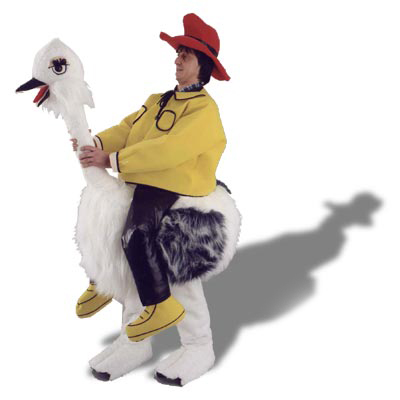
That's when it gets interesting. You see, the mascots were in many shapes and sizes, usually with very large, anime style heads. The most common and innovative costume was the ostrich: a person would basically pull on what looked like ostrich legs and then a belt that looked like a life size ostrich body. Off the top of the body dangled a pair of fabric human legs, giving the impression that the human upper half was in fact riding an ostrich. (something along the lines of this but less redneck and more Asian-y) Unfortunately, as creative and comical as this outfit was, it did not lend itself well to running through wickets. The big, clumsy ostrich feet kept falling off all over the field and the mascots had such a hard time getting themselves through those inflatable hoops with a ostrich neck sticking out of their stomachs and legs dangling around on either side. The 7 year olds weren't much help as they, desperate to win the really, would drag the shoeless mascots along through the hoops and down the field. Priceless.

On top of that I went to a Psy concert with my student on Wednesday night. This guy is famous for putting on a great show, and he did not disappoint. For starters, he's a crazy Korean guy, kind of pudgy, in a red tux with coattails and glitter. He was jumping up and down on the stage, the lights were all over the place, glitter and streamer and confetti canons, pyro technics, and a stage full of breakdancers. He covered many popular songs as well as the more upbeat ones of his own. The crowd was intense, most of who had bought little glow in the dark sticks to shake madly, and spent the majority of the hour and a half jumping up and down. Surprisingly enough there were people of all ages at the concert: teens, college kids, young couples, parents in their 40's with their children, even old men in their 70's.

For the final number, Psy got up on a crane and was panned out over the entire crowd. The best song that he performed was one where he turned off the lights and his group of breakdancers were all in glow in the darkoutfits and all the women had glow in the dark streamers in their hair. The whole lot of them had these lightsaber-type things and everyone was spinning and shaking and bouncing on the stage. As hard as it is to find an artist in Korea that doesn't bore you off your seat with stiff posture and sappy ballads, Psy was a welcome breath of fresh air on the painfully lacking Korean music scene.

Wednesday, May 23, 2007

Cultural Oddity Moment #11

In Korea there are two types of weddings: a traditional wedding (전통식) and a modern wedding (현대식). Nowadays, thanks to Hollywood and American cultural imperialism, a Western style wedding has become quite popular among the currently marrying generation of Korean youth. But how Western is it? Surely they got the ceremony and atmosphere completely right. Nothing could go wrong with the idea of an Asia country mimicking a Western cultural practice, right? (I'm reminded here of the Meiji restoration and the ball that was thrown by the new Japanese gov't. ㅋㅋㅋ)

Clearly, all was not right.

First off, there was no church, no pastor. I can assume with 80% certainty that the marrying couple was indeed Christian as Seoul is overwhelming a Christian city just by demographics, but the very fact that the wedding was Western style is enough that I would bet an appendage that both those people were Christian (Christianity here is another post all together). We went to a "wedding hall," a 6 story construction with two chambers per floor in which weddings were being held all day, every hour on the hour. Instead of a pastor there was just some guy speaking about all the things that should and are expected to be said (...long life...prosperity...good times and bad...love...happiness...don't go to bed angry...). The religious aspect of the Western wedding was completely removed.

The very fact that I was there is proof enough that everyone on the planet was invited. Koreans like their weddings big and bustling: it never actually got quiet at any point before, during, or after the ceremony. There were people chatting it up, kids running and playing and laughing, and old men telling stories all throughout the entire show.

And it was a show. I'm talking about a spotlight whirling around the room like a blue light special at K-mart, multiple light fixtures fading from one color to another, and machines enveloping the whole floor in a layer of fog. It was like Kiss was doing a tour called "Matrimonium." I kept waiting for the pyrotechnics.


The bride and groom said not one word the entire time. In fact, their participation in the whole event was to walk down the aisle (together might I add: no giving the bride away and no superstition about seeing the bride in advance either.), stand and listen to the speaker, and then bow to each set of parents and walk out. There was no exchange of vows, no ring, no flower girl, no brides maids or best man, no bride's side or groom's side of the room, no "I do," no kiss. It was a wedding completely stripped of everything. The one ceremony that they did stick to (but completely at the wrong time) was cutting the cake. After the speaker was done, women dressed like the Navy rolled a wedding cake over on a cart that was also spewing fog. The bride and groom were given a machete and they held it together as they hacked the top layer of the cake in half. Immediately after the cake was severed, the Navy ladies rolled it back away. They didn't even eat the cake!


During the ceremony a very intrusive and indiscreet cameraman and photographer walked in circles around the speaker and the couple, sticking flashing bulbs and video cameras in their faces. After a while they started to film those of us in the crowd who were actually watching the debacle. Soon the audience was getting into it, and people in t-shirts and jeans would walk up with a kid on one hip, stand behind the speaker, and take a picture of the couples faces from over the man's shoulders...as he was marrying them!

I don't know if anything about it was very Western at all, but the feast afterward was top notch. I stuffed myself at the "reception," which was held in a banquet hall in the adjacent building. Again, there was no band, no couple's first dance, no Father/daughter dance, no dancing at all for that matter.

This has been your cultural oddity moment of the day.